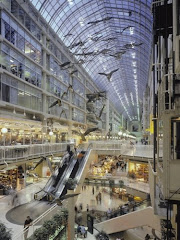
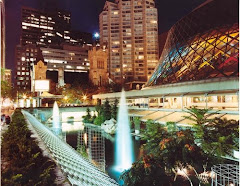
And so, in the tone of the Bible, they came to the land, they toiled and their God was pleased. But it was not without pain.
Although their western background of the British and the Portuguese colonial eras helped the Goans in assimilating into Canada, there was yet a lot they did not understand.
They did not understand why the husband could not speak on behalf of the wife, or on behalf of their children of majority. They did not understand why in many cases their wives could earn more than they did. They could not understand why though they worked so hard and knew more, their colleagues who could verbally spout (that counted for 'communication'), would pass them for promotions. Those who did, thrived, and those who didn't, held on to the hope that one day they would go back to Goa where things were much saner. At least to them.
There was a lot of hubris to many a Goan male. Used to a background where a marriage was made for life, they could not reconcile to the pressures of living in the western world. To him, it was enough that he worked hard, that he brought his family to a better country and had made things possible. Bombarded from all sides from high pressure advertising, from conversations with female colleagues at the office and other pulls, the Goan wife deemed it not enough. The fact was, both needed to grow.
When the children rebelled, as children all over are wont to do, the mother took the children's side and the father felt betrayed. One's line in the sand was redrawn by the other. And the children took advantage of it. Still, there was nothing that could not be solved with some family or marriage counselling in which Canada abounds, but the Goan's inherent nature would not allow it. What would society think, was the paramount obstacle in their heads. It's the other's fault, not mine, was another obstacle.
But marriages survived and healed because Goan Toronto is Toronto. Families talked to each other, they called each other to their homes and they celebrated their occasions like Goans do and that helped in the healing. The problems after all, were not confined to them alone. That, and the financial effects of a separation, held the bond that was made in some old Catholic Church or Cathedral in Saddar Town, Panjim, Bandra or Entebbe.
And so the first generation families thrived despite all the conflicting pressures of jobs, children, marriages and a new society. The nest was the castle where the heating was adequate and the cold drafts of the psychological winters were kept at bay. The children had a home where both father and mother were present and the children too thrived in the warmth. For Toronto where the divorce rate is 60%, the
Goan rate of about 5 says a lot for the strong fiber of the community. Those rolling hills of Sangolda and the lush paddy fields of Cavelossim no matter how many generations ago, had played their part in a drama enacted in a young country more than 8000 miles away.
To the Gulf and the Indian Goan, the nascent dream of one day going back to Goa never went away. They dreamt of the days when Goa was pristine and poor and the people uncalculating. Like the Jews, whenever they met they toasted to the Goan equivalent of L'Chaim - To Life! Next year in Jerusalem! The children would have homes of their own and they would go back to the land they so loved. They went for their vacations to Goa as often as they could, husband and wife and they saw that Eden was not Eden any more. The wives broke ranks first. Goa, they said, not for me! Canada is much better even in my old age. Few cheat, the systems are orderly, I get good health care and I can have a say if something bothers me. Besides, my children are here. The husbands refused to let go of Jerusalem, but as more time passed and things got worse in Eden, they too agreed.
It's no longer L'Chaim for the Canadian Goans. It's more like I'm happy where I am.
Sunday, February 1, 2009


The Second Generation Loses Its Roots
The first generation of Goans trooping into Canada from Africa, Pakistan, India and the Gulf came with great expectations for their children. Except where they came in to escape expulsions and persecution, they immigrated to a man because of the common hope that their children should live in a country that was stable, permanent, orderly, peaceful and rich.
Like Goans elsewhere, and generations before them, they wanted their children to face a better future than they did, and to that end, they were willing to face uncertainty in employment, a different, much unfriendlier culture than their own and the harsh vagaries of inclement weather. They were ready to miss the fish, the feni and the feasts so that when the time came for them to pass, they had something to show for their sacrifice. This was their culture right or wrong - that no matter how much you had missed in life, whether education, comfort or anything else, you would be determined to ensure that your children would miss nothing.
The Gulf Goans were the most to suffer. They had choice, they had money and they had a country to return to, where they could enjoy the rest of their lives in wealth and ease. But they forsook all this for what they had reckoned was the betterment of their children. They left well paying jobs, but without the education or the skills that were required for the Canadian market-place.
In those material hopes for their children, they were not disappointed.
The little tykes went into their public schools, fresh-faced and incredulous at their new surroundings. They quickly picked up the Canadian accent and bravely faced the cold of winter. Their teachers for their own good refused to let them stay in the warm classrooms at recess and shoved them into the playground cold. Red as tomatoes their cheeks turned. Bullied in many instances, they were. Used to the new teaching styles and curriculums they became. But before you could say Jack Robinson, they got to be Canadian like everybody else. Of course they were brown and not white, but in the multi-colored sea that is Toronto, they were as much at home as anybody else. The fact that by the 80s Canada had become completely non-racial, worked to their good.
In the years that went by, their native Goan genes gave them the edge they required. More than anyone else, the Indians and the Chinese filled Toronto's Universities and these young Goans became the engineers, scientists, business execs, doctors, bureaucrats and entrepreneurs their families wanted them to be. They got good jobs at Canada's leading corporations and they earn the money at 25 that exceeds what their parents struggle to earn at 50. They had made it and the future was bright under the Canadian sun and the snow.
But there is another side to all this. It was too optimistic for the Goan to expect that their children would become Canadian while still retaining what was good in the Goan. Children rebelled against their fathers. They disrespected them, seeing what they viewed as people just off the boat. The blame was not all theirs. The first generation immigrant wanted to foist their values and traditions on the second and the second would have none of it. In backlash, there was sullenness, anger and resentment. And the fathers said to themselves "And I came to Canada for all this." In their early teens, the children would have none of this thing they heard from their parents about being Goan. They rejected the food cooked by their mothers who cooked it the only way they knew and they settled for the burgers, the pizzas and the pastas. Must have made the Italians happy.
But as they grew, loved and married people from other cultural and racial backgrounds, they changed a little. They wanted to find out more about their being Goan. Going to see Goa, the land many of them had never seen before or couldn't remember, became de rigeur. Some of them even wanted to have their weddings there. Goa after all was for them an exotic destination. They came back wide eyed and happy. They loved the people, they loved the land and even more importantly, their spouses loved it more than they did. They promised to go back again and when they found the time, they do.
As their children in turn became parents, the old resentments healed. But the parents are smart now. They know these kids would never become Goan again.
Like Goans elsewhere, and generations before them, they wanted their children to face a better future than they did, and to that end, they were willing to face uncertainty in employment, a different, much unfriendlier culture than their own and the harsh vagaries of inclement weather. They were ready to miss the fish, the feni and the feasts so that when the time came for them to pass, they had something to show for their sacrifice. This was their culture right or wrong - that no matter how much you had missed in life, whether education, comfort or anything else, you would be determined to ensure that your children would miss nothing.
The Gulf Goans were the most to suffer. They had choice, they had money and they had a country to return to, where they could enjoy the rest of their lives in wealth and ease. But they forsook all this for what they had reckoned was the betterment of their children. They left well paying jobs, but without the education or the skills that were required for the Canadian market-place.
In those material hopes for their children, they were not disappointed.
The little tykes went into their public schools, fresh-faced and incredulous at their new surroundings. They quickly picked up the Canadian accent and bravely faced the cold of winter. Their teachers for their own good refused to let them stay in the warm classrooms at recess and shoved them into the playground cold. Red as tomatoes their cheeks turned. Bullied in many instances, they were. Used to the new teaching styles and curriculums they became. But before you could say Jack Robinson, they got to be Canadian like everybody else. Of course they were brown and not white, but in the multi-colored sea that is Toronto, they were as much at home as anybody else. The fact that by the 80s Canada had become completely non-racial, worked to their good.
In the years that went by, their native Goan genes gave them the edge they required. More than anyone else, the Indians and the Chinese filled Toronto's Universities and these young Goans became the engineers, scientists, business execs, doctors, bureaucrats and entrepreneurs their families wanted them to be. They got good jobs at Canada's leading corporations and they earn the money at 25 that exceeds what their parents struggle to earn at 50. They had made it and the future was bright under the Canadian sun and the snow.
But there is another side to all this. It was too optimistic for the Goan to expect that their children would become Canadian while still retaining what was good in the Goan. Children rebelled against their fathers. They disrespected them, seeing what they viewed as people just off the boat. The blame was not all theirs. The first generation immigrant wanted to foist their values and traditions on the second and the second would have none of it. In backlash, there was sullenness, anger and resentment. And the fathers said to themselves "And I came to Canada for all this." In their early teens, the children would have none of this thing they heard from their parents about being Goan. They rejected the food cooked by their mothers who cooked it the only way they knew and they settled for the burgers, the pizzas and the pastas. Must have made the Italians happy.
But as they grew, loved and married people from other cultural and racial backgrounds, they changed a little. They wanted to find out more about their being Goan. Going to see Goa, the land many of them had never seen before or couldn't remember, became de rigeur. Some of them even wanted to have their weddings there. Goa after all was for them an exotic destination. They came back wide eyed and happy. They loved the people, they loved the land and even more importantly, their spouses loved it more than they did. They promised to go back again and when they found the time, they do.
As their children in turn became parents, the old resentments healed. But the parents are smart now. They know these kids would never become Goan again.
Toronto's Goan Fabric
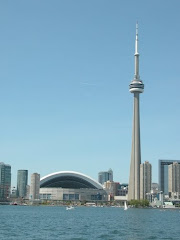
The Greater Toronto Area encompasses the City of Toronto (itself an amalgamation of the former cities of Scarborough, North York, York, East York and Etobicoke) and Mississauga. However the GTA as it is known, extends over a wide swathe of residential neighborhoods that would take you 2 hours driving time at 120 kmph on the connecting Highway 401 from west to east, end to end.
The main body of Goans live in Scarborough, Mississauga and Markham, which is north of Toronto, although in the last few years they have inhabited the newer neighborhoods of Pickering and Ajax. Downtown Toronto has it's share of Goan yuppies (with no children) and retirees who have splurged on luxury lakeside condos from the generous proceeds of downsizing from large homes that eventually became empty nests with all their children gone. The population of the GTA is about 4 million souls of which Goans must be about 70 to 80 thousand. The Goan numbers are estimates.
Goan immigration to Toronto, indeed Canada, came from the following waves:
1. Bombay Goans who came in the 50s and 60s with Indian passports and were admitted into Canada without any visas due to Commonwealth status. They just bought an air ticket and immigrated.
2. Karachi Goans also in the same period who were getting disillusioned with the Islamic State and were suffering religious persecution.
3. East Africa Goans from the 70s. The first major number was in 1972 due to Idi Amin's Uganda Asian expulsion.
4. Arabian Gulf Goans from the late 80s. The first Gulf wave was from Bahrain.
5. Bombay Goans from the 90s
The Gulf and Bombay Goans continue to come in significant numbers.
As a population, Goans are well-settled and could be considered affluent relative to other communities. Although mainly from the middle, non-professional class (unlike the USA), they worked diligently and hard, bought homes and accumulated assets. The Goans from East Africa are the most well-off as they joined the Federal and Provincial Govt in large numbers (shades of East Africa) and eventually the Govt turned out to be the best employer. Good salaries and especially fat retirement pensions. A husband and wife couple who reached the 80 factor (50 years old + 30 years service) get a monthly pension of about $8,000 per month in total. This is a significant amount, considering that the mortgage has been paid off, the children studies completed and no major expenses to take care of.
The Bombay Goans have been the biggest achievers. They did not hesitate to re-qualify, a distinct mentality difference from the Gulf Goans whose main mantra seemed to be "I am too old to study, the brain cells have rusted". The BGs also did not hesitate to take low paying jobs and rose quickly through the ranks. A main Canadian feature which takes much getting used to is "start low and rise fast". Another is very few non-Canadian qualifications are given any importance and the third is the insistence on "Canadian experience". The new immigrant gets stumped with this. How can I get Canadian experience if you don't give me the first job they ask.
In the first year or two, the new Goan immigrant gets really disheartened. He has left his comfort zone, his life-long friends, his titled position and is forced to draw down on his savings which can disappear at an alarming rate. This is the Canadian test of fire. Most survive. Only to be faced with the Canadian winter, which he discovers is about a little less than half the year.
The weather is the subject of another chapter.
The main body of Goans live in Scarborough, Mississauga and Markham, which is north of Toronto, although in the last few years they have inhabited the newer neighborhoods of Pickering and Ajax. Downtown Toronto has it's share of Goan yuppies (with no children) and retirees who have splurged on luxury lakeside condos from the generous proceeds of downsizing from large homes that eventually became empty nests with all their children gone. The population of the GTA is about 4 million souls of which Goans must be about 70 to 80 thousand. The Goan numbers are estimates.
Goan immigration to Toronto, indeed Canada, came from the following waves:
1. Bombay Goans who came in the 50s and 60s with Indian passports and were admitted into Canada without any visas due to Commonwealth status. They just bought an air ticket and immigrated.
2. Karachi Goans also in the same period who were getting disillusioned with the Islamic State and were suffering religious persecution.
3. East Africa Goans from the 70s. The first major number was in 1972 due to Idi Amin's Uganda Asian expulsion.
4. Arabian Gulf Goans from the late 80s. The first Gulf wave was from Bahrain.
5. Bombay Goans from the 90s
The Gulf and Bombay Goans continue to come in significant numbers.
As a population, Goans are well-settled and could be considered affluent relative to other communities. Although mainly from the middle, non-professional class (unlike the USA), they worked diligently and hard, bought homes and accumulated assets. The Goans from East Africa are the most well-off as they joined the Federal and Provincial Govt in large numbers (shades of East Africa) and eventually the Govt turned out to be the best employer. Good salaries and especially fat retirement pensions. A husband and wife couple who reached the 80 factor (50 years old + 30 years service) get a monthly pension of about $8,000 per month in total. This is a significant amount, considering that the mortgage has been paid off, the children studies completed and no major expenses to take care of.
The Bombay Goans have been the biggest achievers. They did not hesitate to re-qualify, a distinct mentality difference from the Gulf Goans whose main mantra seemed to be "I am too old to study, the brain cells have rusted". The BGs also did not hesitate to take low paying jobs and rose quickly through the ranks. A main Canadian feature which takes much getting used to is "start low and rise fast". Another is very few non-Canadian qualifications are given any importance and the third is the insistence on "Canadian experience". The new immigrant gets stumped with this. How can I get Canadian experience if you don't give me the first job they ask.
In the first year or two, the new Goan immigrant gets really disheartened. He has left his comfort zone, his life-long friends, his titled position and is forced to draw down on his savings which can disappear at an alarming rate. This is the Canadian test of fire. Most survive. Only to be faced with the Canadian winter, which he discovers is about a little less than half the year.
The weather is the subject of another chapter.
Religion and the Toronto Goan
55% of Toronto residents are first or second generation immigrants. Of the Christian Torontonians, fully half are Roman Catholic. That means while Churches in the rest of Canada are quite empty for Sunday masses, Toronto Catholic Churches are always full. The first generation immigrant, misfortune-afflicted nothwithstanding, rarely
lets go of his God. However, the grip of faith doesn't last much beyond the first generation.
Take the Portuguese and the Italians for example. You will find old widowed Portuguese women in their traditional neighborhood enclaves of mid-town Toronto, trudging to church for a weekday evening mass even in the bitterest of cold snaps. Their children and grandchildren on the contrary, are only seen in the Church or the Rectory when they require certificates for marriage or citizenship. They go as Catholics but do little to profess their faith. I am not being judgmental, merely observant. Christmas and Easter to them are times to visit their parents for a good meal and exchange presents - nothing more.
The Filipino and the Goan communities on the contrary, hold on to their religion much more strongly than they did in the countries they came from. This is a phenomenon that never fails to amaze. Take the West Indian Hindu community for example. Brought to Trinidad, Guyana and other WI island nations by the Brits as indentured labor in the 18th century to tend to the sugarcane crops or work on other plantations. They were glad to escape the rigors of their Harijan life in Bihar or UP. Today, they have shed all likeness to their ancestors and exhibit all the characteristics of their black, white, chinese and portuguese island brethren except one. They hold on to their traditional Hindu beliefs many of which you will not find in India any more. Perhaps in a world of fleeting changes, some values act as anchors.
Catholicism in Canada is the legacy of the French Quebecers. They came to the New World as faithful subjects of their Kings and their Popes and fought the British who were Protestants, quite fiercely. They carved a home for themselves in what was then called Lower Canada and is now the Province of Quebec. Larger in area than even Ontario, Quebec became more prosperous than it's Anglo neighboring province. Montreal was THE city of Canada. The largest corporations were headquartered there and the city had a distinct European flavor that it's rival Toronto envied. Toronto was known as the good. The plain would have been a better description. Before that, Hogtown, as pigs to be slaughtered were brought to the city's meat packing plants.
Montreal on the contrary was smooth, sophisticated and a gourmet's paradise. All that changed when the Quebec government insisted on undue emphasis on the French language. The province emptied out it's riches which relocated to Ontario and British Columbia.
Montreal now holds only its grand relics of Catholicism. The Cathedral of Notre Dame, its St Joseph's Oratory and its manifold places of worship all along the St Lawrence River. No tourist to Toronto misses a visit to any of these. The Churches are mostly empty and in rural Quebec, it's much worse. None of the handful of people who patronize them are under 70 except for Goans who have populated Montreal and its surrounding cities from the days when Goan immigrants to Canada came to Montreal, not Toronto to build their new lives.
Toronto is a very immigrant friendly city. Cuisines from every country are served at its ethnic restaurants, while Greek, Italian and Portuguese food places have long since been considered almost mainstream. There are hardly any Goan restaurants (one to be exact) and that's a shame. Granted that the restaurant business is fiercely
competitive in Toronto, it is still surprising that not one Goan restaurant has survived over the years. The owners blame it on the reluctance of Goan patrons. They say that Goans look at the restaurant offerings and think "I eat better and cheaper at home". The patrons blame it on poor service, unimaginative decor and reluctance to invest for the long haul. The truth as usual is somewhere in between.
The Goan community I would say is split fairly equally down the middle as far as liberal and forward thinking views and values are concerned. There is the part of the community that has no problems with adapting to Canada. They are well socialized, change habits for the better and show no opposition to their sons and daughters marrying good people who are non-Goans and non-Indians. Their children are instilled with enduring values and education and they treat them and their peers in the community with respect. But there is that other section too. The people who have not changed much despite living in the western world for considerable time. They feel they are unjustly treated at jobs, they are beyond strict with their children, making no concession to modernity. Some of them are still caste-ridden. They might as well have remained in some backwoods of Goa. This difference between the two sections of the Goan community has no relationship to affluence or acquired wealth. It's just their state of mind, mostly a hangover of their upbringing. But then isn't that true of Goan communities everywhere? Even in Goa are not Goans split into such a division?
Toronto Goans though, truthfully are one of the most generous of the diaspora. Their hospitality rivals with that seen in Goa 50 years ago. They are friendly, they are helpful and to the new Goan immigrant they will stretch themselves no matter the lack of appreciation from the people they have helped and who are now well-settled. Gratitude sometimes seems a failing of certain sections of the community. But that is neither here nor there.
lets go of his God. However, the grip of faith doesn't last much beyond the first generation.
Take the Portuguese and the Italians for example. You will find old widowed Portuguese women in their traditional neighborhood enclaves of mid-town Toronto, trudging to church for a weekday evening mass even in the bitterest of cold snaps. Their children and grandchildren on the contrary, are only seen in the Church or the Rectory when they require certificates for marriage or citizenship. They go as Catholics but do little to profess their faith. I am not being judgmental, merely observant. Christmas and Easter to them are times to visit their parents for a good meal and exchange presents - nothing more.
The Filipino and the Goan communities on the contrary, hold on to their religion much more strongly than they did in the countries they came from. This is a phenomenon that never fails to amaze. Take the West Indian Hindu community for example. Brought to Trinidad, Guyana and other WI island nations by the Brits as indentured labor in the 18th century to tend to the sugarcane crops or work on other plantations. They were glad to escape the rigors of their Harijan life in Bihar or UP. Today, they have shed all likeness to their ancestors and exhibit all the characteristics of their black, white, chinese and portuguese island brethren except one. They hold on to their traditional Hindu beliefs many of which you will not find in India any more. Perhaps in a world of fleeting changes, some values act as anchors.
Catholicism in Canada is the legacy of the French Quebecers. They came to the New World as faithful subjects of their Kings and their Popes and fought the British who were Protestants, quite fiercely. They carved a home for themselves in what was then called Lower Canada and is now the Province of Quebec. Larger in area than even Ontario, Quebec became more prosperous than it's Anglo neighboring province. Montreal was THE city of Canada. The largest corporations were headquartered there and the city had a distinct European flavor that it's rival Toronto envied. Toronto was known as the good. The plain would have been a better description. Before that, Hogtown, as pigs to be slaughtered were brought to the city's meat packing plants.
Montreal on the contrary was smooth, sophisticated and a gourmet's paradise. All that changed when the Quebec government insisted on undue emphasis on the French language. The province emptied out it's riches which relocated to Ontario and British Columbia.
Montreal now holds only its grand relics of Catholicism. The Cathedral of Notre Dame, its St Joseph's Oratory and its manifold places of worship all along the St Lawrence River. No tourist to Toronto misses a visit to any of these. The Churches are mostly empty and in rural Quebec, it's much worse. None of the handful of people who patronize them are under 70 except for Goans who have populated Montreal and its surrounding cities from the days when Goan immigrants to Canada came to Montreal, not Toronto to build their new lives.
Toronto is a very immigrant friendly city. Cuisines from every country are served at its ethnic restaurants, while Greek, Italian and Portuguese food places have long since been considered almost mainstream. There are hardly any Goan restaurants (one to be exact) and that's a shame. Granted that the restaurant business is fiercely
competitive in Toronto, it is still surprising that not one Goan restaurant has survived over the years. The owners blame it on the reluctance of Goan patrons. They say that Goans look at the restaurant offerings and think "I eat better and cheaper at home". The patrons blame it on poor service, unimaginative decor and reluctance to invest for the long haul. The truth as usual is somewhere in between.
The Goan community I would say is split fairly equally down the middle as far as liberal and forward thinking views and values are concerned. There is the part of the community that has no problems with adapting to Canada. They are well socialized, change habits for the better and show no opposition to their sons and daughters marrying good people who are non-Goans and non-Indians. Their children are instilled with enduring values and education and they treat them and their peers in the community with respect. But there is that other section too. The people who have not changed much despite living in the western world for considerable time. They feel they are unjustly treated at jobs, they are beyond strict with their children, making no concession to modernity. Some of them are still caste-ridden. They might as well have remained in some backwoods of Goa. This difference between the two sections of the Goan community has no relationship to affluence or acquired wealth. It's just their state of mind, mostly a hangover of their upbringing. But then isn't that true of Goan communities everywhere? Even in Goa are not Goans split into such a division?
Toronto Goans though, truthfully are one of the most generous of the diaspora. Their hospitality rivals with that seen in Goa 50 years ago. They are friendly, they are helpful and to the new Goan immigrant they will stretch themselves no matter the lack of appreciation from the people they have helped and who are now well-settled. Gratitude sometimes seems a failing of certain sections of the community. But that is neither here nor there.
Tuesday, December 23, 2008
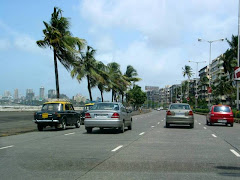
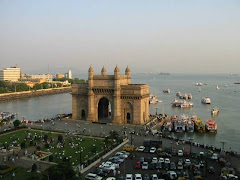
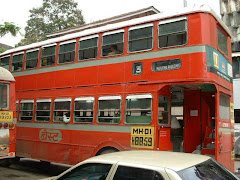
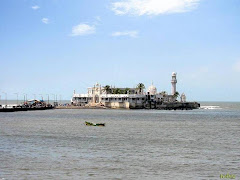
The Bombay I Shall Never Forget
The Bombay I Shall Never Forget
Bombay city grew on you, especially if you were born in it.
Ask any born Bombayite or even anyone who has lived in the city for more than a couple of years and you will detect grudging admiration for the place. To the outsider the closeness that the Bombaykar once had for his town was always a source of wonderment. They see an overcrowded city, with apartments the size of matchboxes, if you lived in an apartment at all.
I distinctly remember when my paternal uncle's family came from Uganda on a long furlough, surveyed the place we lived in and wondered how we would all fit in it for 4 months. But fit in it they did and had the time of their lives. No doubt in Africa they must have had a large bungalow with gardens and a car parked outside surrounded by lush greenery as far as I could tell from the photos they showed us. But in the time they spent in Bombay, they didn't miss all that at all. Could have been the joy of brothers meeting again, but I suspect it was the city more than the kinship that triumphed.
In those apartments people not only lived but they lived happily. They threw parties, they entertained guests from the mofussil (a quaint Indian term for out-of-town). Goans in Bombay every now and then played hosts to their relatives, friends and even village-folk from Goa who needed to come to the metropolis be it for wedding shopping or surgery or a million other things that could not be done in Goa.
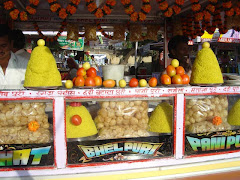
Bombay was the place to be. There were football matches in the Cooperage grounds between East Bengal and Mohun Began that no Goan would miss. There was the Metro, the New Empire, the Excelsior and the Regal cinemas where you could watch the lastest English movies. After a Metro movie you could go to an Aunty's hooch joint in Dhobitalao. The Excelsior and the New Empire had Vittal's Bhel Puri House where
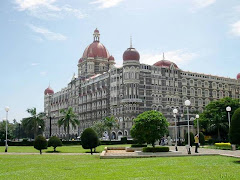
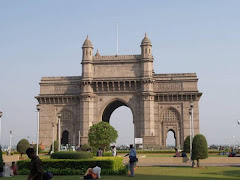
the snacks were like nothing you could ever have anywhere else. The Regal called for a walk down Causeway with your girl where you could not sidestep Fredrick's, or Annapurna's or if you were felling a little rich, go into the Harbour Bar at the Taj where the cocktails were as exotic as their names. As a generation, we were introduced to the Bloody Mary, the Singapore Sling, the Screwdriver and the Peacemaker by the tenders of this very bar.
If Beale Street was the haven for the Memphis blues, Dixie sounds, Tennessee Bluegrass and jazz in all it's forms, then Bombay's Churchgate area was the premier refuge for the western music of the day. The jazz bands were as good as those in New Orleans. Beat Groups belted out Cliff Richard, Englebert Humberdinck, Tom Jones and Mungo Jerry like they were Bombay's own. If you were clasically inclined it was Victor Paranjoti and the Bombay Madrigal. If you went highbrow, there were the shows by Adi Marzban and all those admen by day who doubled up as stage actors by night to give the performance of their lives.
That was the era of the Goan village social, the wedding receptions that knew no 11 pm curfew and the Christmas and New Year dances in all their glory when Christmas and New Year celebrations in Goa were unheard of. Cavel, Dabul, Dhobitalao and Girgaum and all the railway institutes were one endless party. If you think the Jamaicans know how to have fun, then you haven't seen the Bombay of yore.
The Bhaiyya brought you milk, the Bania sold you groceries. The Mian-bhai made you delectable roadside seekh kebabs and faloodas. The Anglo Indians drove your trains and nursed you in well kept hospitals. The Goans sold you bread and liquor and no-one questioned the combination. Nobody asked about your religion, though everybody knew it. The Hindus, the Muslims, the Parsees, the Jains, the Sikhs - all were a natural part of Bombay and had more affinity towards it then the places they came from. The Jews in the city had their patrician history and their grand landmarks, but they looked and talked like any other Maharashtrian. Even the Goans who would not miss ther summer soujourns in Goa for the mangoes, the fish and the feni, came
scurrying back to their city at the first sign of rains.
You grew up, went to school and then off to the ivory towers. You came out bright-eyed and bushy tailed, went to make your mark in the world and Bombay allowed it all. With peace, with bustling commerce, but above all with style and panache. Corruption was the exception rather than the norm. The Hindu elder would not allow anything like that to stain his family pride. The Bade-Mian would use Islam as a shining torch to guide his life and his interaction with others. The Parsis could not spell the word much less let it despoil them with it's indignity. Even the Gujarati merchant princes and shopkeeper alike took their profits without depriving their customers of value received.
It was an innocent age. Perhaps we didn't know simplicity and transparency because we indulged in so much of it. It had to one day end like the beauty of a young and pretty maiden. The disappearance was a gradual process. The rich became richer and the poor poorer. The Hindus are incited to hate the Muslims who in turn see themselves as victims. In the name of self defence they are forced to store machetes, bombs and every weapon they can find in their mosques, because they have no confidence in the police in times of communal riots. The Marathis were taught by petty politicains to hate the South Indians and then the North Indians even though they were in Bombay longer than those who came to the city from Konkan and Vidarbha.
But the new generation in Bombay are intelligent, pushy and world wise. They are not willing to accept the accumulated rot. They spit at the political pigs who used to wear fake Gandhi caps but now wear safaris, suits and saffron and govern them. There is a vibrant media who shine a bright light on every dark deed and who compete with CNN as evidenced in the recent days of Bombay's own 9/11.
It is on these shoulders that hope rests that Bombay will get to becoming Bombay once again.
Bombay city grew on you, especially if you were born in it.
Ask any born Bombayite or even anyone who has lived in the city for more than a couple of years and you will detect grudging admiration for the place. To the outsider the closeness that the Bombaykar once had for his town was always a source of wonderment. They see an overcrowded city, with apartments the size of matchboxes, if you lived in an apartment at all.
I distinctly remember when my paternal uncle's family came from Uganda on a long furlough, surveyed the place we lived in and wondered how we would all fit in it for 4 months. But fit in it they did and had the time of their lives. No doubt in Africa they must have had a large bungalow with gardens and a car parked outside surrounded by lush greenery as far as I could tell from the photos they showed us. But in the time they spent in Bombay, they didn't miss all that at all. Could have been the joy of brothers meeting again, but I suspect it was the city more than the kinship that triumphed.
In those apartments people not only lived but they lived happily. They threw parties, they entertained guests from the mofussil (a quaint Indian term for out-of-town). Goans in Bombay every now and then played hosts to their relatives, friends and even village-folk from Goa who needed to come to the metropolis be it for wedding shopping or surgery or a million other things that could not be done in Goa.
Bombay was the place to be. There were football matches in the Cooperage grounds between East Bengal and Mohun Began that no Goan would miss. There was the Metro, the New Empire, the Excelsior and the Regal cinemas where you could watch the lastest English movies. After a Metro movie you could go to an Aunty's hooch joint in Dhobitalao. The Excelsior and the New Empire had Vittal's Bhel Puri House where
the snacks were like nothing you could ever have anywhere else. The Regal called for a walk down Causeway with your girl where you could not sidestep Fredrick's, or Annapurna's or if you were felling a little rich, go into the Harbour Bar at the Taj where the cocktails were as exotic as their names. As a generation, we were introduced to the Bloody Mary, the Singapore Sling, the Screwdriver and the Peacemaker by the tenders of this very bar.
If Beale Street was the haven for the Memphis blues, Dixie sounds, Tennessee Bluegrass and jazz in all it's forms, then Bombay's Churchgate area was the premier refuge for the western music of the day. The jazz bands were as good as those in New Orleans. Beat Groups belted out Cliff Richard, Englebert Humberdinck, Tom Jones and Mungo Jerry like they were Bombay's own. If you were clasically inclined it was Victor Paranjoti and the Bombay Madrigal. If you went highbrow, there were the shows by Adi Marzban and all those admen by day who doubled up as stage actors by night to give the performance of their lives.
That was the era of the Goan village social, the wedding receptions that knew no 11 pm curfew and the Christmas and New Year dances in all their glory when Christmas and New Year celebrations in Goa were unheard of. Cavel, Dabul, Dhobitalao and Girgaum and all the railway institutes were one endless party. If you think the Jamaicans know how to have fun, then you haven't seen the Bombay of yore.
The Bhaiyya brought you milk, the Bania sold you groceries. The Mian-bhai made you delectable roadside seekh kebabs and faloodas. The Anglo Indians drove your trains and nursed you in well kept hospitals. The Goans sold you bread and liquor and no-one questioned the combination. Nobody asked about your religion, though everybody knew it. The Hindus, the Muslims, the Parsees, the Jains, the Sikhs - all were a natural part of Bombay and had more affinity towards it then the places they came from. The Jews in the city had their patrician history and their grand landmarks, but they looked and talked like any other Maharashtrian. Even the Goans who would not miss ther summer soujourns in Goa for the mangoes, the fish and the feni, came
scurrying back to their city at the first sign of rains.
You grew up, went to school and then off to the ivory towers. You came out bright-eyed and bushy tailed, went to make your mark in the world and Bombay allowed it all. With peace, with bustling commerce, but above all with style and panache. Corruption was the exception rather than the norm. The Hindu elder would not allow anything like that to stain his family pride. The Bade-Mian would use Islam as a shining torch to guide his life and his interaction with others. The Parsis could not spell the word much less let it despoil them with it's indignity. Even the Gujarati merchant princes and shopkeeper alike took their profits without depriving their customers of value received.
It was an innocent age. Perhaps we didn't know simplicity and transparency because we indulged in so much of it. It had to one day end like the beauty of a young and pretty maiden. The disappearance was a gradual process. The rich became richer and the poor poorer. The Hindus are incited to hate the Muslims who in turn see themselves as victims. In the name of self defence they are forced to store machetes, bombs and every weapon they can find in their mosques, because they have no confidence in the police in times of communal riots. The Marathis were taught by petty politicains to hate the South Indians and then the North Indians even though they were in Bombay longer than those who came to the city from Konkan and Vidarbha.
But the new generation in Bombay are intelligent, pushy and world wise. They are not willing to accept the accumulated rot. They spit at the political pigs who used to wear fake Gandhi caps but now wear safaris, suits and saffron and govern them. There is a vibrant media who shine a bright light on every dark deed and who compete with CNN as evidenced in the recent days of Bombay's own 9/11.
It is on these shoulders that hope rests that Bombay will get to becoming Bombay once again.
Wednesday, July 9, 2008
Goan Achievers and Achievements
GOANS ARE ALL OVER THE WORLD, DOING ALL KINDS OF THINGS
By Frederick Noronha
Some helped build the steel frame of British colonialism. Others spent their lives fighting alongside their Black brethren against British and other foreign rule in East Africa.
Some were cardinals, while others were Free Masons. From the tiny region of Goa came forth world-class men (and women) of medicine, super- cops, scientists and sculptors. And more. If you thought Goan achievers were just in a field or two, then check up their impressive list of achievements.
There are names that pop out from the world of music, the military, economists, educationists, engineers, and even governors and ambassadors.
This becomes clear in a recently-published book by octogenarian Dr. J.Clement Vaz. At 82, and despite living outside Goa for long, Vaz remains a Goaphile at heart, and tackles the task with keenness. Fortunately, author Vaz has undertaken this labour of love -- most books on Goa hardly rake in profits -- at a suitable point of time.
Vaz's life spans colonial and post-colonial Goa. Had he not written it, many of these personalities would have been unknown to or forgotten by the generation of youngsters which don't have much contact with the past and can't read Portuguese either. Vaz has come up with an impressive listing.
Early on, Goa gained a plethora of big names amidst the Catholic religious. There were two Cardinals -- Valerian Gracias in Bombay and Joseph Cordeiro of Pakistan -- and two Apolostic Nuncios. Eight archbishops of Goan origin have served in Bhopal, Delhi, Calcutta, Nagpur, and Agra, besides Goa itself. Vaz lists over three dozen bishops too, the latest being Filipe Neri Ferrao, who was consecrated auxiliary bishop of Goa in 1994. Later, people from this region went to excel in many other fields.
Great men of science also have the made-in-Goa stamp on them. One of India's pioneer of the food-irradiation programme was Dr Norman Lewis of Goa. Other prominent men of science included medical practitioner Emidio Afonso, who was also a mini-sculptor, a violinist or an ingenious mechanic. Just out of his teens, he reconstructed with the simplest available material a simplified version of Sir J C Bose's crescograph, an instrument for measuring the sensitivity of plants.
It was a Goan who discovered protozoa, parasites, microbes and viruses many of which bear the Latin name given by him followed by the name "de Mello" as the discoverer. Dr Froilano de Mello (1877-1955) was a research scientist of high calibre, a successful professor, a literary man, and an eloquent impromptu speaker. He did remarkable work for improving the health of the malaria-endemic city of Old Goa by mapping the entire area so as to discover the source of malaria. By 1927, this work was completed and over 18,000 wells with stagnant water were uncovered in the jungle that had grown where Old Goa existed two centuries earlier. He fought valiant battles against TB and leprosy. He was hailed as one of the foremost leprologists.
Datta V. Naik (50), known as Kumar to his friends, is a product of St. Xavier's Mapusa who showed that youngsters given the opportunities in Goa can even receive a Certificate of Recognition from the US National Aeronautics and Space Administration (NASA).
Remember the Bunsen burner from your chemistry lab? It was Goan scientist Agostinho Vincente Lourence (b.1862) who went to Germany to work under the famous chemist Bunsen. There's a bust of Lourence in the Lisbon Academy of Science, which stands besides Lavoisier and others.
There's also a bust at the Municipal Garden in Margao. Abbe Faria's achievements in hypnotism are also too well known.
Goa threw up renowned Indologists and were experts in studying coins. One such illustrious figure was Damodar Dharmanand Kossambi (1907-1966).
Goa's supercops include the well-known Julio Francis Ribeiro, later ambassador to Romania. John Lobo (b.1921) was the Director of India's Central Bureau of Investigation. He introduced innovative features in the Bombay police, including its data processing unit, dog-squad, conviction index bureau and the like. He was Chief Security Liaison Officer to two prime ministers.
Caejetan Joseph Vincent Miranda of Loutolim was director of the Anti-Corruption Bureau. "During his scintillating tenure of three years, the ACB struck terror into the hearts of smugglers, and as a result of his successful anti-smuggling drive, the government exchequer was substantially enriched," says Vaz.
Big names from Goa in the military include Air Marshal Terence Joseph de Sa (b.1928) of Sangolda, Major General Antonio Caetano da Silva (b.1930), Major Gen. Eustace D'Souza, Lt. Gen. F.T.Dias of Velcao, Lt. Gen.S.L.Menezes of Sangolda, Lt.Gen Eric Alexander Vas of Saligao, Gen Sunit Francis Rodrigues of Curtorim, who rose to the highest post in the Indian army.
Manoel Antonio de Souza of Mapusa who went to Mozambique and consolidated “his little kingdom" by "driving back the attacks of natives". He played a role in pushing ahead the frontiers for the Portuguese, and organised a little kingdom and a "perfect little state" with an army of 30,000 men and its own guns, fortresses and administration.
Goans -- despite coming from a tiny portion of Planet Earth -- are everywhere, it would seem. In a plane crash, when a VVIP plane crashed while accompanying ex-PM Morarji Dessai at Jorhat in Assam, the pilot who died was a Goan, Clarence de Lima.
Both in propping up a colonial order, and trying to destroy it, Goans had a role.
Pio Gama Pinto boldly took the side of Africa in colonial times, and rose to become director of the Pan African Press. He worked to set up the Lumumba Institute, designed to train party officials of the KANU.
Aden-born Keith Vaz of the House of Commons, and Canon Castilho Serpa do Rosario Noronha (elected for three successive terms as representative of Portuguese India) are other prominent members of Parliament.
Rama Krishna Hegde played the role of peace-maker between opposing factions of Goan patriots. Patriot Telo Mascarenhas did a Portuguese translation of the autobiography of Mahatma Gandhi. Laxmikant Bhembre, in forced exile in Portugal, conducted classes on the Bhagvadgita for Portuguese enthusiasts. Peter Alvares, from Parra, was a seasoned activist, socialist and founder of many unions for railways employees.
Others from here have earned fame by wielding the pen. Journalists like Dom Moraes (b.1938) has won the American Press Club Citation for Excellence in Reporting, for some 20 articles he wrote for the "New York Times Sunday Magazine". People like humourist and management expert George Menezes speak as many as nine languages -- French, German, Portuguese, Spanish, Hindi, Marathi, Konkani, Kannada and English!
Jawaharlal Francis "Joe" Rodrigues was an editor in Nairobi, and an executive board member of the International Press Institute. Frank Moraes is, of course, a big name. Writer Ladis da Silva has written on the Inuit and the North American Indians. Joseph Furtado (1872-1947) of Pilerne was one of the early Goans who attempted to write poetry in English.
Books by Goan authors -- like Lambert Mascarenhas' "Sorrowing Lies My Land" has been translated even into languages like Telugu, points out this new book.
Goa has also thrown up multi-faceted scholars like Jose Pereira (b.1931) who is -- all at once -- a writer, orator, historian, musicologist, theologist and a naturalist of a high order. Mariano Jose Saldanha (1878-1975) was involved in organising Konkani programmes to be broadcast to Goans in British East Africa and the Gulf region. Fr Antonio Pereira (b.1919) has scores of books and publications to his credit, mainly in Konkani. Francisco Luis Gomes (1829-1869) of Navelim was hailed in Europe as the "prince of intellectuals".
Mons. Sebastiao Rodolfo Dalgado (1855-1922) of Assagao had a penchant for knowing the basic structure of a language. He acquired familiarity with Malayalam and Sinhala, with Bengali and Kannada, and even studied Marathi and Sanskrit. In 1892, he produced a Konkani-Portuguese dictionary and later a grammar.
Sixteenth century Quelossim genius Krishnadas Shama left behind several stories in pure Konkani, which entitle him to be called a brilliant writer of Konkani of the sixteenth century.
Other talent too flows from the hands of people from Goa.
Artist Francis Newton Souza (b.1924) was the subject of a book published in London. Titled "Souza", the book with text by English critic Edwin Mullin looks at this artist's career in the UK. Ramchandra Pandurang Kamat of Madkai was hailed as a genius among the sculptors of his time, during his travels in Europe.
Agnelo da Fonseca, of Santo Estevam, is noted for his talent of presenting Christian themes in Indian setting and style. Fonseca painted for powers both spiritual and temporal. His paintings are in churches of Pune, while Lisbon commissioned him to do a large painting on the death of Dom Joao de Castro in 1953. He was also requisitioned by Lady Maharaj Singh, wife of the then Governor of Bombay, and Viceroy of India Lord Linlithgow.
Goa has produced a number of top medicos too.
Dr Sanjay Khope of Cuncolim has a surgery technique named after him -- Khope's Operation. Dr Sandra de Sa Souza (b.1943) has been hailed as one of India's pioneer in cochlear implant surgery, providing new hope to the totally deaf. Her dad, Dr Joe de Sa, was a well-known ENT specialist in Bombay. Dr Luzito de Souza, her cousin, is an internationally known oncologist. Dr Chicot Vaz is a leading neurologist in the country. Other prominent medical specialists and surgeons include Dr. Eustace J. de Souza, US-based medico-surgeon Dr Yvan J das Dores Silva, cancer-surgeon Dr. Luis Jose de Souza, physiologist Dr Anthony Charles Duarte-Monteiro, and late Dr Manuel Vincente Alfredo da Costa (who has a hospital named after him in Lisbon).
Dr Arthur E de Sa of Asnora was an eminent surgeon, and accompanied Lady Edwina Mountbatten to riot-stricken areas of West Pakistan at the height of the communal frenzy after Partition. Dr Vithal N. Shirodkar, of Shiroda, has the famous 'Shirodkar Technique' for opening blocked fallopian tubes and the cervical hood. Noted cancer surgeon Dr Ernest Borges of Ucassiam is another big name. Dr Acacio Gabriel Viegas (1856-1933) is credited with the discovery of the outbreak of bubonic plague in Bombay in 1896. He was responsible for saving many lives and eventually controlling the plague.
Dada Vaidya, from a family of Ayurveda physicians, and in true family traditions never accepted any fees and on the contrary gave drugs he prescribed free. For him the art of healing was a vocation and a sacred duty. He also began a campaign towards preventing diseases.
Goans have also come out tops in the fields of judiciary and law.
Fitz R S de Souza, bar-at-law and PhD from London, was an important figure in African politics. Particular Kenya's struggle for freedom. John Maximian Nazareth (1908-1989) was president of the East African Indian Congress, and also served as puisne judge of the Kenya Supreme Court. Justice Vassant Krishna Tamba (b.1926) has served as a judge of the Supreme Court of Portugal. Goan judges have served in Angola and Mozambique, as did Aleixo Antonio Xavier Jose Ludovico da Costa (1904-1976). Justice Kashinath Trimbak Telang was called to the bar at the age of 22 and was an authority on Hindu Law. He later was judge of the High Court of Bombay, and he was the only one to be selected for special mention in the Cambridge History of English Literature. Luis da Cunha Gonsalves (b.1875) wrote as many as 14 volumes on his studies of Civil Law.
Late Manuel Menezes (1922-1996), recently caught up in the Konkan Railway controversy in Goa, was a high-caliber technocrat. Alfred Julius D'Souza (b.1923) of Saligao was an assistant commissioner of income tax.
John Francis Ludger Gracias (1888-1969), among the first Goans to migrate to Kenya, played a major role in the establishment of the Kenya and Uganda Railways and Harbours. He was awarded with an MBE by King Edward VIII -- one of the few honours bestowed by King Edward in his short reign.
Brilliant Goan civil engineer Bismark Dias is remembered for designing the town of Vasco da Gama, with its tree-lined boulevards and gardens. In the US, he has done work on devices used in colour TV receivers, and also ultrasound imaging devices.
Charles Correa, another Goan, has designed monuments ranging from the Kasturba Gandhi Samadhi at Pune, to Salvacao Church in Bombay and hotels in Andamans and Kovalam. F Paul de Mello is a Goan engineer who has earned name and fame in Brazil. His brother Dr Victor F B de Mello rose to professorships at the three principal universities in Sao Paulo.
Engineering prodigy Suman Moolgaokar, born in Bombay, earned a big name in Tata's. In his tenure, TELCO's entry into the manufacture of passenger cars merited him being called the father of India's automobile industry.
Way back in 1957, Albert Vivian D'Costa of Aldona was already investigating weak bridges. William Xavier Mascarenhas, an associate of the legendary Sir Visheshvaraya, was involved in pre-Independence planning of major roads, bridges and river valley projects. Engineer A X Moraes rose to meet the crisis of floods in Gujarat in 1927. Grateful public thanked him at a public meet in Nadiad.
Despite what it might seems, Goans have skills at diplomacy too.
Placido D'Souza (b.1933) was ambassador to a large number of countries, including in the West Indies, Panama, Zaire, New York, Port of Spain, Hong Kong and Nairobi. Another diplomat of Goan origin, Peter Lynn Sinai (b.1933) topped the competitive exams in 1956. Anthony Lancelot Dias, ICS (b.1910) was praised for negotiating India's foodgrains with "great ability and success". He was appointed Lt. Governor of Tripura in 1970 and later Governor of West Bengal.
During the time of the Bangladesh war, a Goan was taking care of refugees flooding into the area -- Governor A. L Dias -- while another, Peter Lynn Sinai, was involved with the formation of the Bangladesh Division at the Ministry of External Affairs.
Educationist Rev Dr Hubert Olympus Mascarenhas (1905-1973) was an Indologist of repute who spoke 11 European languages, in addition to Sanskrit and several Indian languages. But his intense patriotism brought him into conflict with the then British archbishop of Bombay.
Jose Gerson da Cunha (1844-1900) from Arpora in Bardez is one of India's prominent historian and Orientalist. Besides Konkani and Portuguese, French, English and Sanskrit, he could handle Pahlevi, Italian, Persian and German. He was also conversant with Marathi. Collector of coins, he had a collection of nearly 27,000 pieces of gold, silver and other baser metals. Dharmanand Kosambi (1876-1947) studied Pali and was a renowned Buddhist scholar.
Goan Victor J Menezes (b.1949) of Bardez has been storming the corporate world as one of the heads of Citicorp. Peter Joseph Joaquim Pinto (b.1915) of Sangolda has been appointed alternate executive director for India on the boards of the IMF and World Bank. Maurice Gracias (b.1923) of Carmona is an economist. In the US foreign service, Gracias was chief auditor and was assigned to 16 African countries. Prabhakar R Narvekar has the distinction of being appointed one of the three deputy managing directors of the IMF. Born in Goa, he was educated in Bombay and Columbia University. He joined the IMF in 1954.
Eric P.W.da Costa (b.1909) has been heading the Indian Institute of Public Opinion, after a significant meet in 1952 with George Gallup, past president of Gallup Polls Inc. He was also earlier president of the World Association for Public Opinion Research. Earlier, da Costa was appointed as assistant to the chief minister of Mysore State. He was invited by noted industrialist, G.D.Birla, to direct the Textile Machinery Corporation of India, and was editor of the 'Eastern Economist' in the 'forties.
Musicians have also made their name for Goa in a big way.
Rev Dr Lourdino Barreto is author of over 100 major works, and his compositions have been performed both in India and abroad. Noel do Carmo Flores was dean of the faculty of music at the University of Vienna. He started piano studies at the age of five, tutored by Goan teachers, and is an alumni of Don Bosco's in Panjim. Kishori Amonkar, Luis Remo de Maria Bernardo Fernandes, Jitendra Abhisheki, Lata Mangueshkar, gifted opera singer late Olegario Frank based in the UK, Kesarbai Kerkar (1892-1977), Dinanath Mangueshkar, and the father of the Goan tiatr Joao Agostinho Fernandes (1871-1947) are among the other names mentioned in the music section.
Dr Owen Pinto made his name in the field of sports medicine in Bombay. Leo Pinto was part of the flood of Goans who hit Indian hockey at one time. In 1948, for instance, there were five Goans in the Indian Olympic hockey team that played at Wembley. Other Goans were also early starters in the field of sports. In 1913, the club of Goans calling itself the Lusitanians won the prestigious Aga Khan Hockey Tournament.
Former 'O Heraldo' editor Dr Carmo Azavedo makes some interesting points in his article on the Goan Diaspora. Britain occupied Portuguese Goa between 1798 and 1812. During their stay here, they had to avail themselves of the services of Goans in various capacities. Appreciating their qualities of "head and heart", the British began recruiting Goans in increasing numbers. First as cooks, butlers and stewards and then as clerks, accountants and so on, as Azavedo puts it.
This was the beginning of migration out of Goa. We don't have a clue as to how many emigrants there are now. But the oft quoted figure is that at the turn of the century, out of a total population of 500,000 people in Goa, abound 100,000 lived outside the territory. Primarily in Bombay.
Goans have since fanned out to various pockets of the globe -- Madras, Calcutta, Delhi, Belgaum, Poona. Pakistan too. Burma, Ceylon and Aden, all then part of British India. Then farther, into Kenya, Uganda and Tanganiyka, as well as to Australia and New Zealand. Some reached Macau, Timor, Mozambique, Angola, Cabo Verde, Guinea and Sao Tome e Principe. Goans have also reached Portugal, UK, Brazil, Australia, Canada and the US.
"It is natural for any group of persons to glory in their own heroes. That gives them a deeper understanding of their own identity. It also affords them role models for imitation and a sense of collective achievement and pride," comments Bishop Ferdinand J. Fonseca in the foreword to this book.
Priced at Rs 400, Vaz's 'Profiles of Eminent Goans: Past and Present' was published late last year by Concept in New Delhi.
By Frederick Noronha
Some helped build the steel frame of British colonialism. Others spent their lives fighting alongside their Black brethren against British and other foreign rule in East Africa.
Some were cardinals, while others were Free Masons. From the tiny region of Goa came forth world-class men (and women) of medicine, super- cops, scientists and sculptors. And more. If you thought Goan achievers were just in a field or two, then check up their impressive list of achievements.
There are names that pop out from the world of music, the military, economists, educationists, engineers, and even governors and ambassadors.
This becomes clear in a recently-published book by octogenarian Dr. J.Clement Vaz. At 82, and despite living outside Goa for long, Vaz remains a Goaphile at heart, and tackles the task with keenness. Fortunately, author Vaz has undertaken this labour of love -- most books on Goa hardly rake in profits -- at a suitable point of time.
Vaz's life spans colonial and post-colonial Goa. Had he not written it, many of these personalities would have been unknown to or forgotten by the generation of youngsters which don't have much contact with the past and can't read Portuguese either. Vaz has come up with an impressive listing.
Early on, Goa gained a plethora of big names amidst the Catholic religious. There were two Cardinals -- Valerian Gracias in Bombay and Joseph Cordeiro of Pakistan -- and two Apolostic Nuncios. Eight archbishops of Goan origin have served in Bhopal, Delhi, Calcutta, Nagpur, and Agra, besides Goa itself. Vaz lists over three dozen bishops too, the latest being Filipe Neri Ferrao, who was consecrated auxiliary bishop of Goa in 1994. Later, people from this region went to excel in many other fields.
Great men of science also have the made-in-Goa stamp on them. One of India's pioneer of the food-irradiation programme was Dr Norman Lewis of Goa. Other prominent men of science included medical practitioner Emidio Afonso, who was also a mini-sculptor, a violinist or an ingenious mechanic. Just out of his teens, he reconstructed with the simplest available material a simplified version of Sir J C Bose's crescograph, an instrument for measuring the sensitivity of plants.
It was a Goan who discovered protozoa, parasites, microbes and viruses many of which bear the Latin name given by him followed by the name "de Mello" as the discoverer. Dr Froilano de Mello (1877-1955) was a research scientist of high calibre, a successful professor, a literary man, and an eloquent impromptu speaker. He did remarkable work for improving the health of the malaria-endemic city of Old Goa by mapping the entire area so as to discover the source of malaria. By 1927, this work was completed and over 18,000 wells with stagnant water were uncovered in the jungle that had grown where Old Goa existed two centuries earlier. He fought valiant battles against TB and leprosy. He was hailed as one of the foremost leprologists.
Datta V. Naik (50), known as Kumar to his friends, is a product of St. Xavier's Mapusa who showed that youngsters given the opportunities in Goa can even receive a Certificate of Recognition from the US National Aeronautics and Space Administration (NASA).
Remember the Bunsen burner from your chemistry lab? It was Goan scientist Agostinho Vincente Lourence (b.1862) who went to Germany to work under the famous chemist Bunsen. There's a bust of Lourence in the Lisbon Academy of Science, which stands besides Lavoisier and others.
There's also a bust at the Municipal Garden in Margao. Abbe Faria's achievements in hypnotism are also too well known.
Goa threw up renowned Indologists and were experts in studying coins. One such illustrious figure was Damodar Dharmanand Kossambi (1907-1966).
Goa's supercops include the well-known Julio Francis Ribeiro, later ambassador to Romania. John Lobo (b.1921) was the Director of India's Central Bureau of Investigation. He introduced innovative features in the Bombay police, including its data processing unit, dog-squad, conviction index bureau and the like. He was Chief Security Liaison Officer to two prime ministers.
Caejetan Joseph Vincent Miranda of Loutolim was director of the Anti-Corruption Bureau. "During his scintillating tenure of three years, the ACB struck terror into the hearts of smugglers, and as a result of his successful anti-smuggling drive, the government exchequer was substantially enriched," says Vaz.
Big names from Goa in the military include Air Marshal Terence Joseph de Sa (b.1928) of Sangolda, Major General Antonio Caetano da Silva (b.1930), Major Gen. Eustace D'Souza, Lt. Gen. F.T.Dias of Velcao, Lt. Gen.S.L.Menezes of Sangolda, Lt.Gen Eric Alexander Vas of Saligao, Gen Sunit Francis Rodrigues of Curtorim, who rose to the highest post in the Indian army.
Manoel Antonio de Souza of Mapusa who went to Mozambique and consolidated “his little kingdom" by "driving back the attacks of natives". He played a role in pushing ahead the frontiers for the Portuguese, and organised a little kingdom and a "perfect little state" with an army of 30,000 men and its own guns, fortresses and administration.
Goans -- despite coming from a tiny portion of Planet Earth -- are everywhere, it would seem. In a plane crash, when a VVIP plane crashed while accompanying ex-PM Morarji Dessai at Jorhat in Assam, the pilot who died was a Goan, Clarence de Lima.
Both in propping up a colonial order, and trying to destroy it, Goans had a role.
Pio Gama Pinto boldly took the side of Africa in colonial times, and rose to become director of the Pan African Press. He worked to set up the Lumumba Institute, designed to train party officials of the KANU.
Aden-born Keith Vaz of the House of Commons, and Canon Castilho Serpa do Rosario Noronha (elected for three successive terms as representative of Portuguese India) are other prominent members of Parliament.
Rama Krishna Hegde played the role of peace-maker between opposing factions of Goan patriots. Patriot Telo Mascarenhas did a Portuguese translation of the autobiography of Mahatma Gandhi. Laxmikant Bhembre, in forced exile in Portugal, conducted classes on the Bhagvadgita for Portuguese enthusiasts. Peter Alvares, from Parra, was a seasoned activist, socialist and founder of many unions for railways employees.
Others from here have earned fame by wielding the pen. Journalists like Dom Moraes (b.1938) has won the American Press Club Citation for Excellence in Reporting, for some 20 articles he wrote for the "New York Times Sunday Magazine". People like humourist and management expert George Menezes speak as many as nine languages -- French, German, Portuguese, Spanish, Hindi, Marathi, Konkani, Kannada and English!
Jawaharlal Francis "Joe" Rodrigues was an editor in Nairobi, and an executive board member of the International Press Institute. Frank Moraes is, of course, a big name. Writer Ladis da Silva has written on the Inuit and the North American Indians. Joseph Furtado (1872-1947) of Pilerne was one of the early Goans who attempted to write poetry in English.
Books by Goan authors -- like Lambert Mascarenhas' "Sorrowing Lies My Land" has been translated even into languages like Telugu, points out this new book.
Goa has also thrown up multi-faceted scholars like Jose Pereira (b.1931) who is -- all at once -- a writer, orator, historian, musicologist, theologist and a naturalist of a high order. Mariano Jose Saldanha (1878-1975) was involved in organising Konkani programmes to be broadcast to Goans in British East Africa and the Gulf region. Fr Antonio Pereira (b.1919) has scores of books and publications to his credit, mainly in Konkani. Francisco Luis Gomes (1829-1869) of Navelim was hailed in Europe as the "prince of intellectuals".
Mons. Sebastiao Rodolfo Dalgado (1855-1922) of Assagao had a penchant for knowing the basic structure of a language. He acquired familiarity with Malayalam and Sinhala, with Bengali and Kannada, and even studied Marathi and Sanskrit. In 1892, he produced a Konkani-Portuguese dictionary and later a grammar.
Sixteenth century Quelossim genius Krishnadas Shama left behind several stories in pure Konkani, which entitle him to be called a brilliant writer of Konkani of the sixteenth century.
Other talent too flows from the hands of people from Goa.
Artist Francis Newton Souza (b.1924) was the subject of a book published in London. Titled "Souza", the book with text by English critic Edwin Mullin looks at this artist's career in the UK. Ramchandra Pandurang Kamat of Madkai was hailed as a genius among the sculptors of his time, during his travels in Europe.
Agnelo da Fonseca, of Santo Estevam, is noted for his talent of presenting Christian themes in Indian setting and style. Fonseca painted for powers both spiritual and temporal. His paintings are in churches of Pune, while Lisbon commissioned him to do a large painting on the death of Dom Joao de Castro in 1953. He was also requisitioned by Lady Maharaj Singh, wife of the then Governor of Bombay, and Viceroy of India Lord Linlithgow.
Goa has produced a number of top medicos too.
Dr Sanjay Khope of Cuncolim has a surgery technique named after him -- Khope's Operation. Dr Sandra de Sa Souza (b.1943) has been hailed as one of India's pioneer in cochlear implant surgery, providing new hope to the totally deaf. Her dad, Dr Joe de Sa, was a well-known ENT specialist in Bombay. Dr Luzito de Souza, her cousin, is an internationally known oncologist. Dr Chicot Vaz is a leading neurologist in the country. Other prominent medical specialists and surgeons include Dr. Eustace J. de Souza, US-based medico-surgeon Dr Yvan J das Dores Silva, cancer-surgeon Dr. Luis Jose de Souza, physiologist Dr Anthony Charles Duarte-Monteiro, and late Dr Manuel Vincente Alfredo da Costa (who has a hospital named after him in Lisbon).
Dr Arthur E de Sa of Asnora was an eminent surgeon, and accompanied Lady Edwina Mountbatten to riot-stricken areas of West Pakistan at the height of the communal frenzy after Partition. Dr Vithal N. Shirodkar, of Shiroda, has the famous 'Shirodkar Technique' for opening blocked fallopian tubes and the cervical hood. Noted cancer surgeon Dr Ernest Borges of Ucassiam is another big name. Dr Acacio Gabriel Viegas (1856-1933) is credited with the discovery of the outbreak of bubonic plague in Bombay in 1896. He was responsible for saving many lives and eventually controlling the plague.
Dada Vaidya, from a family of Ayurveda physicians, and in true family traditions never accepted any fees and on the contrary gave drugs he prescribed free. For him the art of healing was a vocation and a sacred duty. He also began a campaign towards preventing diseases.
Goans have also come out tops in the fields of judiciary and law.
Fitz R S de Souza, bar-at-law and PhD from London, was an important figure in African politics. Particular Kenya's struggle for freedom. John Maximian Nazareth (1908-1989) was president of the East African Indian Congress, and also served as puisne judge of the Kenya Supreme Court. Justice Vassant Krishna Tamba (b.1926) has served as a judge of the Supreme Court of Portugal. Goan judges have served in Angola and Mozambique, as did Aleixo Antonio Xavier Jose Ludovico da Costa (1904-1976). Justice Kashinath Trimbak Telang was called to the bar at the age of 22 and was an authority on Hindu Law. He later was judge of the High Court of Bombay, and he was the only one to be selected for special mention in the Cambridge History of English Literature. Luis da Cunha Gonsalves (b.1875) wrote as many as 14 volumes on his studies of Civil Law.
Late Manuel Menezes (1922-1996), recently caught up in the Konkan Railway controversy in Goa, was a high-caliber technocrat. Alfred Julius D'Souza (b.1923) of Saligao was an assistant commissioner of income tax.
John Francis Ludger Gracias (1888-1969), among the first Goans to migrate to Kenya, played a major role in the establishment of the Kenya and Uganda Railways and Harbours. He was awarded with an MBE by King Edward VIII -- one of the few honours bestowed by King Edward in his short reign.
Brilliant Goan civil engineer Bismark Dias is remembered for designing the town of Vasco da Gama, with its tree-lined boulevards and gardens. In the US, he has done work on devices used in colour TV receivers, and also ultrasound imaging devices.
Charles Correa, another Goan, has designed monuments ranging from the Kasturba Gandhi Samadhi at Pune, to Salvacao Church in Bombay and hotels in Andamans and Kovalam. F Paul de Mello is a Goan engineer who has earned name and fame in Brazil. His brother Dr Victor F B de Mello rose to professorships at the three principal universities in Sao Paulo.
Engineering prodigy Suman Moolgaokar, born in Bombay, earned a big name in Tata's. In his tenure, TELCO's entry into the manufacture of passenger cars merited him being called the father of India's automobile industry.
Way back in 1957, Albert Vivian D'Costa of Aldona was already investigating weak bridges. William Xavier Mascarenhas, an associate of the legendary Sir Visheshvaraya, was involved in pre-Independence planning of major roads, bridges and river valley projects. Engineer A X Moraes rose to meet the crisis of floods in Gujarat in 1927. Grateful public thanked him at a public meet in Nadiad.
Despite what it might seems, Goans have skills at diplomacy too.
Placido D'Souza (b.1933) was ambassador to a large number of countries, including in the West Indies, Panama, Zaire, New York, Port of Spain, Hong Kong and Nairobi. Another diplomat of Goan origin, Peter Lynn Sinai (b.1933) topped the competitive exams in 1956. Anthony Lancelot Dias, ICS (b.1910) was praised for negotiating India's foodgrains with "great ability and success". He was appointed Lt. Governor of Tripura in 1970 and later Governor of West Bengal.
During the time of the Bangladesh war, a Goan was taking care of refugees flooding into the area -- Governor A. L Dias -- while another, Peter Lynn Sinai, was involved with the formation of the Bangladesh Division at the Ministry of External Affairs.
Educationist Rev Dr Hubert Olympus Mascarenhas (1905-1973) was an Indologist of repute who spoke 11 European languages, in addition to Sanskrit and several Indian languages. But his intense patriotism brought him into conflict with the then British archbishop of Bombay.
Jose Gerson da Cunha (1844-1900) from Arpora in Bardez is one of India's prominent historian and Orientalist. Besides Konkani and Portuguese, French, English and Sanskrit, he could handle Pahlevi, Italian, Persian and German. He was also conversant with Marathi. Collector of coins, he had a collection of nearly 27,000 pieces of gold, silver and other baser metals. Dharmanand Kosambi (1876-1947) studied Pali and was a renowned Buddhist scholar.
Goan Victor J Menezes (b.1949) of Bardez has been storming the corporate world as one of the heads of Citicorp. Peter Joseph Joaquim Pinto (b.1915) of Sangolda has been appointed alternate executive director for India on the boards of the IMF and World Bank. Maurice Gracias (b.1923) of Carmona is an economist. In the US foreign service, Gracias was chief auditor and was assigned to 16 African countries. Prabhakar R Narvekar has the distinction of being appointed one of the three deputy managing directors of the IMF. Born in Goa, he was educated in Bombay and Columbia University. He joined the IMF in 1954.
Eric P.W.da Costa (b.1909) has been heading the Indian Institute of Public Opinion, after a significant meet in 1952 with George Gallup, past president of Gallup Polls Inc. He was also earlier president of the World Association for Public Opinion Research. Earlier, da Costa was appointed as assistant to the chief minister of Mysore State. He was invited by noted industrialist, G.D.Birla, to direct the Textile Machinery Corporation of India, and was editor of the 'Eastern Economist' in the 'forties.
Musicians have also made their name for Goa in a big way.
Rev Dr Lourdino Barreto is author of over 100 major works, and his compositions have been performed both in India and abroad. Noel do Carmo Flores was dean of the faculty of music at the University of Vienna. He started piano studies at the age of five, tutored by Goan teachers, and is an alumni of Don Bosco's in Panjim. Kishori Amonkar, Luis Remo de Maria Bernardo Fernandes, Jitendra Abhisheki, Lata Mangueshkar, gifted opera singer late Olegario Frank based in the UK, Kesarbai Kerkar (1892-1977), Dinanath Mangueshkar, and the father of the Goan tiatr Joao Agostinho Fernandes (1871-1947) are among the other names mentioned in the music section.
Dr Owen Pinto made his name in the field of sports medicine in Bombay. Leo Pinto was part of the flood of Goans who hit Indian hockey at one time. In 1948, for instance, there were five Goans in the Indian Olympic hockey team that played at Wembley. Other Goans were also early starters in the field of sports. In 1913, the club of Goans calling itself the Lusitanians won the prestigious Aga Khan Hockey Tournament.
Former 'O Heraldo' editor Dr Carmo Azavedo makes some interesting points in his article on the Goan Diaspora. Britain occupied Portuguese Goa between 1798 and 1812. During their stay here, they had to avail themselves of the services of Goans in various capacities. Appreciating their qualities of "head and heart", the British began recruiting Goans in increasing numbers. First as cooks, butlers and stewards and then as clerks, accountants and so on, as Azavedo puts it.
This was the beginning of migration out of Goa. We don't have a clue as to how many emigrants there are now. But the oft quoted figure is that at the turn of the century, out of a total population of 500,000 people in Goa, abound 100,000 lived outside the territory. Primarily in Bombay.
Goans have since fanned out to various pockets of the globe -- Madras, Calcutta, Delhi, Belgaum, Poona. Pakistan too. Burma, Ceylon and Aden, all then part of British India. Then farther, into Kenya, Uganda and Tanganiyka, as well as to Australia and New Zealand. Some reached Macau, Timor, Mozambique, Angola, Cabo Verde, Guinea and Sao Tome e Principe. Goans have also reached Portugal, UK, Brazil, Australia, Canada and the US.
"It is natural for any group of persons to glory in their own heroes. That gives them a deeper understanding of their own identity. It also affords them role models for imitation and a sense of collective achievement and pride," comments Bishop Ferdinand J. Fonseca in the foreword to this book.
Priced at Rs 400, Vaz's 'Profiles of Eminent Goans: Past and Present' was published late last year by Concept in New Delhi.
Sunday, July 6, 2008
Sorry Sam, We Indians Need To Hang Our Heads In Shame
Sent to me by a friend. I do not know who wrote it nor where it was first seen, but it is noteworthy
The passing away of the only Indian to be appointed Field Marshal when in active service has been remarkable for the warmth of the ordinary men and women who queued up to say "meebeenamet" to the adorable dikra who put his life on the line for them.
It has also been remarkable for the complete lack of grace and gratitude, civility and courtesy, decency and decorum on the part of the bold-faced names rapaciously grazing the lawns of power in Delhi and elsewhere, for the brain behind India's only decisive military victory.
Sam, the Bahadur, had been unwell for a while now. From about 1000 hours on June 26, reports of his being 'critically ill' had appeared in the media. Yet, when the 'expected tocsin' sounded at 0030 hours till the guns were fired in salute around 1500 hours on June 27, 'civil society' chose to show its incivility.
a.. Pratibha Patil, the commander-in- chief of the armed forces with all the time in the world: Absent
b.. Hamid Ansari: Vice-president releasing books and writing reviews of books by fellow-travellers: Absent
c.. Manmohan Singh, the prime minister who could do with a bit of the field marshal's charisma and heroism: Absent
d.. Sonia Gandhi: daughter-in-law of the woman the field marshal called 'sweetie': Absent
e.. L K Advani: prime minister in waiting of the party which would like to do to Pakistan what Manekshaw did: Absent
f.. M Karunanidhi and Surjit: chief minister and governor of the state which Manekshaw had made his home for 35 years: Absent
Politicians may have their reasons. They always do. Maybe, there are issues like protocol. Maybe, this is one way in which 'civil India' shows the armed forces its place. Maybe, this is why we are not as militaristic as Pakistan. Maybe, the knees are just too old to climb the hills.
But what about the armed forces itself?
a.. A K Antony: the defence minister 'now behaving like the chairman of the confederation of the armed forces' trade unions: absent 'due to prior political engagements'.
b.. The chief of army staff: absent (away in Russia)
c.. The chief of navy staff: absent
d.. The chief of air staff (incidentally, a Parsi ): absent
The fact that the defence minister was represented by his deputy Pallam Raju, the fact that the navy and air staff sent two-star general rank officers, shows that however high or mighty, however rich or powerful, civilian or military, if you should die as you must, you should do so somewhere in the vicinity of New Delhi -- or Bombay. Or else, they must have some use for you. Or else, too bad.
As he rightly surmised once:
'I wonder whether those of our political masters who have been put in charge of the defence of the country can distinguish a mortar from a motor; a gun from a howitzer; a guerrilla from a gorilla -- although a great many of them in the past have resembled the latter.'
The contrast couldn't be starker:
a.. When Amitabh Bachchan was ill after being socked in the stomach during the shooting of Coolie, Indira Gandhi flew down to Bombay to show her concern.
b.. When Dhirubhai Ambani died, L K Advani cut short his Gujarat tour to pay his respects to an 'embodiment of initiative, enterprise and determination'.
c.. When Pramod Mahajan was shot dead by his brother, Vice President Bhairon Singh Shekawat had the time to attend the funeral.
Our VIPs and VVIPs have time for dead and dying celebrities, charlatans, fixers. Not for a field marshal? In his biography, K M Cariappa, the only other field marshal India has had (and who too died at age 94), writes of his father's cremation in May 1993:
'Honouring him in death as they did in life were Field Marshal Manekshaw, the three service chiefs all of whom belonged to the same course and at whose passing out parade from the joint services wing father had presided, the gracious chief minister M Veerappa Moily and C K Jaffer Sharief, Minister for Railways representing the president as the supreme commander of the armed forces.'
Somebody should have told the geniuses in Delhi that Sam, the Bahadur, passed away in Wellington, Ooty, not Wellington, New Zealand. The nearest civil airport is Coimbatore, just 80 km away.
If this is how we say goodbye to Field Marshal Sam Manekshaw, any wonder why Rang de Basanti could successfully tap into the angst of an entire generation?
The passing away of the only Indian to be appointed Field Marshal when in active service has been remarkable for the warmth of the ordinary men and women who queued up to say "meebeenamet" to the adorable dikra who put his life on the line for them.
It has also been remarkable for the complete lack of grace and gratitude, civility and courtesy, decency and decorum on the part of the bold-faced names rapaciously grazing the lawns of power in Delhi and elsewhere, for the brain behind India's only decisive military victory.
Sam, the Bahadur, had been unwell for a while now. From about 1000 hours on June 26, reports of his being 'critically ill' had appeared in the media. Yet, when the 'expected tocsin' sounded at 0030 hours till the guns were fired in salute around 1500 hours on June 27, 'civil society' chose to show its incivility.
a.. Pratibha Patil, the commander-in- chief of the armed forces with all the time in the world: Absent
b.. Hamid Ansari: Vice-president releasing books and writing reviews of books by fellow-travellers: Absent
c.. Manmohan Singh, the prime minister who could do with a bit of the field marshal's charisma and heroism: Absent
d.. Sonia Gandhi: daughter-in-law of the woman the field marshal called 'sweetie': Absent
e.. L K Advani: prime minister in waiting of the party which would like to do to Pakistan what Manekshaw did: Absent
f.. M Karunanidhi and Surjit: chief minister and governor of the state which Manekshaw had made his home for 35 years: Absent
Politicians may have their reasons. They always do. Maybe, there are issues like protocol. Maybe, this is one way in which 'civil India' shows the armed forces its place. Maybe, this is why we are not as militaristic as Pakistan. Maybe, the knees are just too old to climb the hills.
But what about the armed forces itself?
a.. A K Antony: the defence minister 'now behaving like the chairman of the confederation of the armed forces' trade unions: absent 'due to prior political engagements'.
b.. The chief of army staff: absent (away in Russia)
c.. The chief of navy staff: absent
d.. The chief of air staff (incidentally, a Parsi ): absent
The fact that the defence minister was represented by his deputy Pallam Raju, the fact that the navy and air staff sent two-star general rank officers, shows that however high or mighty, however rich or powerful, civilian or military, if you should die as you must, you should do so somewhere in the vicinity of New Delhi -- or Bombay. Or else, they must have some use for you. Or else, too bad.
As he rightly surmised once:
'I wonder whether those of our political masters who have been put in charge of the defence of the country can distinguish a mortar from a motor; a gun from a howitzer; a guerrilla from a gorilla -- although a great many of them in the past have resembled the latter.'
The contrast couldn't be starker:
a.. When Amitabh Bachchan was ill after being socked in the stomach during the shooting of Coolie, Indira Gandhi flew down to Bombay to show her concern.
b.. When Dhirubhai Ambani died, L K Advani cut short his Gujarat tour to pay his respects to an 'embodiment of initiative, enterprise and determination'.
c.. When Pramod Mahajan was shot dead by his brother, Vice President Bhairon Singh Shekawat had the time to attend the funeral.
Our VIPs and VVIPs have time for dead and dying celebrities, charlatans, fixers. Not for a field marshal? In his biography, K M Cariappa, the only other field marshal India has had (and who too died at age 94), writes of his father's cremation in May 1993:
'Honouring him in death as they did in life were Field Marshal Manekshaw, the three service chiefs all of whom belonged to the same course and at whose passing out parade from the joint services wing father had presided, the gracious chief minister M Veerappa Moily and C K Jaffer Sharief, Minister for Railways representing the president as the supreme commander of the armed forces.'
Somebody should have told the geniuses in Delhi that Sam, the Bahadur, passed away in Wellington, Ooty, not Wellington, New Zealand. The nearest civil airport is Coimbatore, just 80 km away.
If this is how we say goodbye to Field Marshal Sam Manekshaw, any wonder why Rang de Basanti could successfully tap into the angst of an entire generation?
Subscribe to:
Posts (Atom)